Fishing with Ant Eggs

| | Comments (0) | TrackBacks (0)

A Young Angler’s Introduction to Mono County Fishing in 1949

By Steve Odell

“In Mono county opening day of fishing season was almost a holiday.”


french-fish.jpg

I was nine years old and my buddy was Woody Reynolds, who was eight years old.  He was a Paiute Indian.  He was being raised by his Aunt Florence Reynolds.  His Grandmother was Nellie Reynolds, a full-blooded Paiute Indian who was born 1890 and lived in the Lee Vining area all her life.  Nellie lived about 5 miles from the town of Lee Vining, overlooking Mono Lake.  Nellie could be seen walking to town or walking home, sunshine or snow.   In her younger years when she would walk to town, she would stop at the Mono Lake School and visit my Grandmother Nora Archer, who was the teacher and lived behind the school, raising her children (my Mother and her sibling).  

      One early summer day Woody and I were hanging out around his house when Nellie asked if we wanted to go fishing.  Needless to say, we both were very happy to go fishing.  Nellie, Woody and I loaded into Nellie’s' model A ford sedan.  Woody and I rode in the rumble seat. We stopped by my house so I could get my fishing pole, a bamboo fly fishing rod with a fly fishing reel filled with yellow fly line.  Nellie told us we were going to the Virginia lakes.  As we headed north on Highway 395,  Nellie pulled off onto the Lundy Lake road and drove about a mile, and then pulled to the side of the dirt road and stopped.  She got out and reached in the car and grabbed a concave, woven Indian basket and a small brown sandwich bag.  She started walking off into the sage brush calling Woody and I to follow.

              We followed her and she walked about a quarter of a mile and suddenly stopped in front of a three foot high pile of twigs.  She removed the top 6 to 8 inches of the cone-shaped pile. Suddenly the mound was alive with millions of large red ants.  She began digging with her bare hands into the mound with the ants swarming her hands.  She removed a handful of twigs and placed them into her basket.  She called me over to her.  She told me to put my hands into the ant nest and grab some of the ant eggs.  I could not see any eggs, but I saw millions of mad red ants.  I told her no, I didn't want to get bit by the ants.  She said, "Don't be a baby!”

              I said, “No!”  She grabbed both my hands by the wrists and placed them into the ant nest.  I began screaming and crying figuring she was torturing me.  She let my hands go with biting ants crawling all over them.  I began shaking the ants off my hands and arms while screaming and crying in pain.  She again grabbed my wrists and held them.

             “Steve, shut up.”  I stopped yelling.  She looked into my eyes and said, "Tell me how much those ant bites hurt?”  I suddenly realized that the bites did hurt, but not that much. 

            I sobbed, “Not much.”  Woody stood there, not saying a word, knowingly, as he had gone through the same ordeal on an earlier fishing trip.  She said, “Okay, get some of the ant eggs out of the nest before the ants take them underground.  We both went to work scooping eggs and twigs out of the nest, placing them onto her basket.  When the basket had a large pile of twigs and eggs on the basket she said that it was enough.  She told me to put back the top of the nest that she had set aside.  I asked her why?  She said, “If we didn't the ants would abandon the nest.  With the top replaced we can return to the nest to gather ant eggs another time.  The ants bring the eggs to the top of the nest in the morning to get the warmth from the sun, and as afternoon arrives and it cools, the ants start taking the eggs back down the nest underground for the night where it keeps the eggs warm through the night.” 

             She picked up the basket, which was about two feet across and began flipping the eggs and twigs into the air.  I watched and asked her what she was doing.  She said that the twigs were lighter than the ant eggs and would fall off the basket leaving the ant eggs to fall onto the basket.  After a while she collected the eggs and put them into the paper bag.  We returned to the car and went back to Highway 395 and drove to the top of Conway Summit (9800 ft.) and turned left onto the Virginia Lakes road.  She drove to Trumble Lake, one of the Virginia lakes. 

            She led us to the other side of the lake to a rocky area where we sat down.  Her fishing gear was an old metal telescopic rod with a casting reel filled with cloth line.  She had a 1/8 size sinker and a  # 8 or 10 hook.  She told me to rig up with the same amount of weight and size of hook.  The ant eggs were about the size of a cooked grain of rice and the same color.  She placed the hook through the middle of the ant egg and kept adding eggs until the hook was filled.  She made a cast, with the sinker making a large splash, about 50 feet out.  There were a lot better sitting spots around the lake so I asked her why she picked this spot?  She said, “If you look closely you can see where there used to be an old stream bed.  The lake is deeper in the old stream bed.  The fish liked it there.”  She sat so still and motionless that I thought she had fallen asleep.  Suddenly she reared her pole back and began reeling in a fish.  She landed fish after fish in this manner, about every five minutes.  I hadn't caught a fish.  “Nellie, why haven’t I caught a fish, when I am using the same bait?” 

              She said, "You are fidgeting too much.  Sit still.  Don't move.”

              There were a few other fishermen nearby, and nearly everyone found a reason to walk by and admire her fish and ask what she was using for bait.  You should have seen their faces when she told them "ant eggs".  Where do you buy them they would ask?  She would answer, "I don't".  The limit then was 25 fish.  Nellie ended catching her limit and I caught about 10.  Woody also caught his limit.  He must have learned his lesson well because he caught more fish than I without much fanfare, as a good buddy would.

french-hat.jpg

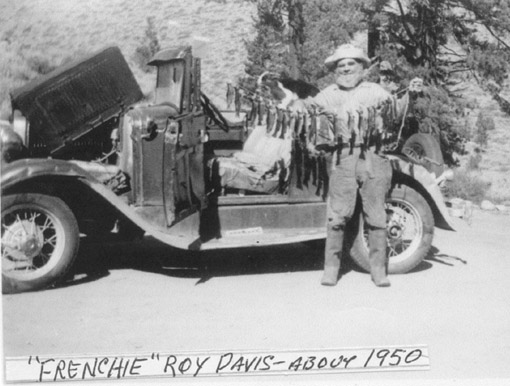
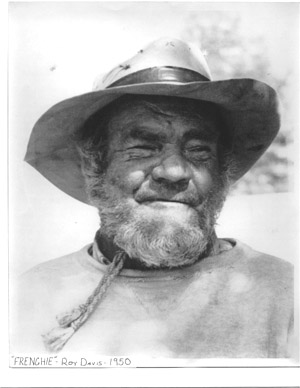
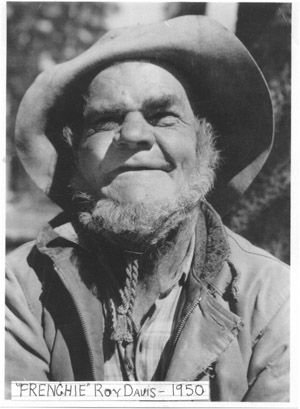
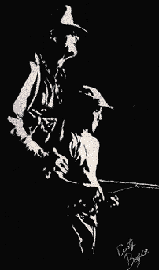
            My other fishing mentor was Frenchie Davis.  I never knew his last name.  I only knew him as Frenchie.  I was nine years old, and Frenchie had asked me if I wanted to learn how to fish.  Naturally I said yes.  He said that fishing season opened in about three weeks.  I went home and asked my mother if I could go fishing with Frenchie on opening day.  My mother paused and quietly weighed my request.  Frenchie was a bachelor.  He liked his drink, and he usually drank to excess.  Frenchies' job was to collect garbage from the restaurants and take it home to feed his hogs, all three of them.  Finally Mom said, “Okay, but you have to be home before dark, and you tell Frenchie that I said "No drinking while you’re with him!”  I ran and found Frenchie and told him I could go.  I had trouble sleeping that night, and waiting for fishing season to open dragged on forever.  In Mono county opening day of fishing season was almost a holiday.  The day finally arrived and I loaded into his car, and away we went to Lundy Lake.  With no top on the car, the dirt road to Lundy Lake was a dusty 11-mile ride. 

             Needless to say I was not aware of anything but getting there and learning to fish.  We arrived at the dam area of Lundy Lake, and hiked down to the lake.  There were no other fishermen at that end of the lake on opening day.  He rigged up a bamboo fly fishing rod with a fly reel and yellow line on it and handed it to me.  He had another pole almost identical to the one he gave me to use.  He led me down to the waters edge and put large worms on our hooks. Then he began roll casting his line out into the lake.  He told me to watch him and do what he did.  I tried and tried, but I couldn't get the hang of it.  He finally stopped fishing and held the pole and line alongside my hands and put my arm through the motion to make a successful cast.  After a few times with his help, I finally got the hang of it and could cast about half as far as he could.  We fished all day and we both caught our limits, 25 rainbows each.  I was so excited and proud, and his encouragement made a lifelong impression.  To add to the day he presented me with the fishing pole that he had let me use.  We had many more fishing trips and exciting adventures.

french-beard.jpg

            As a boy growing up in the Sierras, we would have many friends and family vacationers in the area, and they would have me guide them and show them how to catch the wily  rainbow trout in the clear mountain streams and lakes.  I used the unorthodox techniques I learned from an old Nellie and the skills that I learned from a some times sober old man, to show how I was able to catch the trout.  I learned how to present natural bait by wading into a stream and floating the bait into and under hidden places along the stream.  I learned how to find the place to fish on a lake shore by looking where old stream or runoff streams entered the lake.

            On a trip in 1954, my brother-in-law, on vacation from Southern California, told me he wanted to catch some nice sized fish to take back with him.  It was November, and the chill had already arrived in the Sierras.  I told him we should fish Rush Creek, between Silver Lake and Grant Lake.  I picked this spot because I knew that fish from Grant lake would swim upstream in rush creek to spawn.  I think the limit was fifteen fish at that time.  We both caught our limit of fish and none were under about 2 pounds.  I caught the biggest rainbow trout of my life on this trip.  I had waded out into the creek and drifted a worm under some overhanging willow bushes.  I was using my bamboo fishing pole with fly line and a small weight on my leader.  The fish hit my bait and immediately felt the hook.  The fish charged upstream toward me.  I was startled and just stood there watching this large fish swimming towards me.  By the time I reacted, the fish spotted me and turned down stream, as startled as I.  Luckily I didn’t have a tight hold of the line and it slid through my fingers.  I was taught that my fingers were the drag on the line.   I could tell that the fish was very heavy, and I tried giving him slack but not too much so that he would throw the hook.  The line started burning my fingers as it slid through my fingers very fast.  I didn’t know how I was going to slow this fish down, and I was sure he was going to break my leader.  I started pulling back on the pole to put pressure on the fish.  This slowed him down just enough to make a leap out of the water.  I gasped when I saw how big this fish was.  I didn’t have a net as I was taught by Frenchie that a good fisherman didn’t need a net.  I was to play the fish until it would give itself up to me.  So the fight was on.  The fish tried to return to Grant Lake, but I wanted to land the biggest fish of my life.  With heart pounding, hands shaking and much second guessing on how to land this monster, the fight continued for what seemed to me as hours, which in actuality was probably about a half an hour.  Finally the battle ended with the fish surrendering to me at my feet.  I measured the fish, and it was 28 inches long.  I never weighed it and sent it home with my brother-in-law.

            Some fifty odd years later in 2007, I found myself standing in the same stream with a similar outfit trying to repeat that day.  It didn't happen.  Next time!     


Fly Fishing Tips and Techniques

| | Comments (0) | TrackBacks (0)

Mastering the Basics of Fly Fishing: Pretest

flyshop.jpg.jpg

Mastering the Basics of Fly Fishing was originally an outline that I followed when I taught classes on fly fishing. Working for an outfitter and fly shop owner in Hamilton, Montana, I taught a number of parent/child introductory classes. Later when I set up my Montana Fly Fishing site in the early 90's, I expanded this article for adults who wanted to learn on their own, as well as parents wanting to teach their children the skills of fly fishing. It continues to be one of the most visited sections on my Montana site. The instructional program is broken down into the sub-categories below.  The entire article is stored on my companion web site, www.fishingtips101.com.

Step 1: Pre and Post Test
Step 2: Terminal equipment and Paraphernalia
Step 3: Necessary Knots and Leaders
Step 4: Casting
Step 5: Basic Fly Patterns and Presentation
Step 6: Mastering the Basics of Creek Fishing
Step 7: Mastering the Basics of Stillwater Fly Fishing

boy.gif

Introduction and Pre / Post Test

Fishing with Lures

| | Comments (0) | TrackBacks (0)

Spoons, Spinners and Jigs

What's in this article?
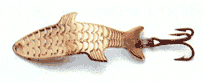
Flatfish.jpg
* A review of the top trout producing lures
* Fishing Tips from Sierra Tackle Shop Managers
* Tips and Techniques for Using Lures in Streams
* Using a Fly Rod Un-conventionally (Like the Old Timers)
* A Killer Technique (NO BULL!)

Rapala.jpg

Through the years I have not kept up with the continuous introduction of new spoons and spinners. I follow the minimalist approach to fly fishing and lure fishing. It has saved me lots of money, allowed me to organize my tackle boxes more intuitively and, most importantly, it has kept me from befuddlement trying to remember when, where and how to effectively fish all the lures that I have crammed into a tackle box. I wasn't surprised to see that my old standbys from the fifties and sixties still reigned supreme in John Merwin's Field and Stream article, "50 Greatest Lures of All Time," published April 2006. When I checked to see if my All-Time Favorite Lure for Mammoth Lakes circa 1959 was even mentioned, I was delighted to find the red and white Daredevle Spinnie ranked in the number two position, just below the Curley Tail Grub. My next favorite lures, Mepps Aglia, Panther Martin, Kastmaster and Little Cleo, were all ranked high. Along with a Super Duper lure, these were the lures that I used exclusively in my youth when I wasn't using a fly rod to dab a red worm in a small crick.

Rooster Tail.jpg

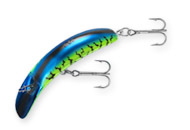
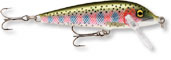
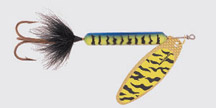
Field and Stream published a follow-up article a year later with "50 Best Lures." For the trout recommendations, they listed (in order of preference) a baker's dozen: 1. Wiggle King Flatfish; 2. Rooster Tail; 3. Panther Martin; 4. Mepps Aglia; 5. Norman Deep Tiny "N" crankbait; 6. CountDown Rapala; 7. Yo-Zuri Snap Bean crankbait; 8. Al's Goldfish; 9. Needlefish spoon; 10. Phoebe spoon; 11. Float and Fly trailer; 12. Marabou Micro-Jig; 13. Mister Twister Jig. Everyone has their confidence lures and their secret, unorthodox perversions of angling tradition that they often don't even share with a brother or best friend. I will share my, honest-to-Goodness, fish catching abomination later in the article.

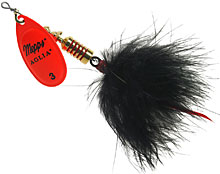
mepps_aglia_marabou.jpg

Recently I surveyed two tackle shop managers in the eastern Sierras for their recommendations. Both shops have long standing reputations for offering good tackle selection, friendly service and outstanding tips and information. Jeremy Ross of Ernie's Tackle and Ski Shop in June Lake and Jim Reid of Ken's Sporting Goods in Bridgeport echoed some of the recommendations of Field and Stream, as well as suggesting tried-and-proven trout catching techniques for the Sierras. In the survey that I submitted to them, I asked them to rank spoons and lures with four rankings. Number 1 was a top choice. I asked them not to differentiate between which lure was the top lure in their number one choices. Keep in mind that I also included bait in this survey. Both men listed CountDown Rapala and Thomas Buoyants as a number one choice. Both managers recommended inflated nightcrawlers and PowerBait as a number 1 pick. Salmon eggs came in 2 and 3, as did Kastmaster lures, Little Cleo lures, Daredevle lures and float-and-fly combinations. Both Jeremy and Jim ranked the Mepps Aglia and the Rooster Tail as a number four choice.

phoebe.gif

For bait Jeremy Ross recommended PowerBait or Gulp or Rainbow. He also recommended original Rapala lures in silver and rated them as a #2 choice. Other lures that he recommends to his customers are Trout Teasers, Tasmanian Devils and Panther Martins, which I forgot to include on the survey. He noted that June Lake has excellent shore access, and he noted that fly fishers in float tubes and kick-boats do well early in the morning and the evening with Woolly Buggers and Matuka streamers. Jim Reid of Bridgeport recommends trolling from Rainbow Point to the dam with flashers and crawlers, Rapala, or Thomas Buoyants both early and late in the season on Bridgeport Reservoir. He also recommended Worden's Flatfish as a #3 choice. When fishing from the shore or a stationary boat, he recommends CountDown Rapala, Buoyants, and Kastmasters near the dam. He said that the best side of the reservoir for shore anglers was northeast from the dam to about a ¼ mile south.

Tips and Techniques

An old adage among lure fisherman is that lures are designed and packaged to attract buyers. Don't believe it for a minute. Most lure companies spend a great deal of money on scientific research. If you fished and fished a lure and never caught a fish and than lost it on a snag, are you going to rush out and replace it? The movement of the spoon or spinner has to be realistic; it has to reflect light, and the color of the lure needs to match a particular color of water, such as brown, green or blue. One simple rule to remember is that if you are fishing at dusk or very low light, fish will see a dark silhouette against a lighter skyline better than if you use a light colored lure. If you are fishing in bright light go white. If you are fishing in the dark go black. Mepps recommends using "silver on bright days; polished brass (gold) blades produce best when it is overcast. Try copper in streams after a heavy rain, or in dark, stained water." Into this equation must be factored the depth and the color of the water and how much current exits. The following lures are recommendations for stream fishing patterns and lake patterns, but first let me review some general information.
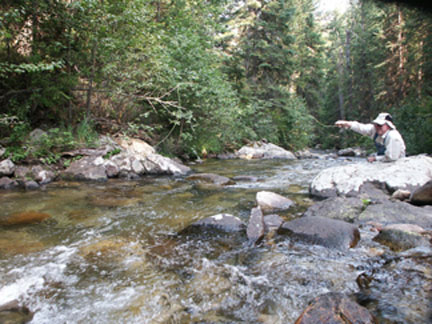
As I have outlined in my article on fly fishing creeks and again in using baits on creeks, let me reiterate a key factor on catching trout in moving water. Get in the water and wade upstream!

Reasons to Get Your Feet Wet and Fish Upstream

1. Fish face upstream. If you are behind them, you can catch them directly in front of you.
2. If you can see to the bottom of the creek, they can see you! Approaching a creek or stream from the bank often spooks fish.
3. It is much easier to cast to a pocket, pool or small riffle from the center of a stream and maintain a slow retrieve. Best of all you are in an ideal position to cast effectively towards either bank.
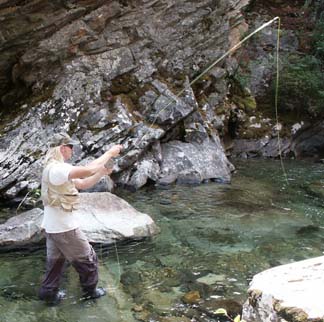
4. Wade fishing in a stream also allows you to cast directly upstream which creates minimal arm, rod and line movement that might otherwise spook a fish. Trout have great peripheral vision. Often they lie in broken water out of sight, but if they don't see the angler blended into the bank cover, they often see a flash of line or arm or rod movement, which warns them that a predator is near. Even while you are wading in the current, it is paramount to keep your shadow off the water in front of you. I often crouch in the water behind a boulder to make a short cast to a pool above me.
5. In many instances, where there is heavy brush or trees, it is difficult to reach choice water from the bank. If you are wading upstream, you have an easier shot at often over-looked water that bank anglers pass up because they can not penetrate the tangled bank barrier.
6. Finally, once you are in the water, keep moving! Bank anglers typically spend too much time sitting on a comfortable rock or log. Fishing is a game of percentages. How many perfect casts to good holding water can you achieve in an outing? If you have made two or three casts to a pool without eliciting a strike, move on to the next spot.
7. I am always amazed at how I can walk up a stream under the cover of moving water without spooking fish, but when I walk along a meadow bank I spook fish way ahead of me just from the vibration of my footsteps, which is another reason to be out in the current. An exception to casting and wading upstream is if you locate a shallow pool that is difficult to approach upstream. Remember that trout face upstream in current so they are often spooked by a lure working from the downstream position right past them. However, in slower water the trout will cruise in all directions so the approach is not critical. Another exception to wading upstream and casting upstream is when you are on a river or large stream. In this situation you can make an effective downstream cast by quartering the stream.
Cast downstream in a quartering angle. In other words, stand facing the opposite bank. Draw an imaginary line from your feet to the opposing bank. You now have half the stream above you and half the stream below you. As you face the bank, the stream flow is coming from your left down stream past your right side. Now, divide the stream below you in half. This quarter demarcation is your target angle for the opposing bank. Cast as close to the bank as possible. If a trout is on the far bank, he will see the lure coming at him broadside and "swimming" out and away from the bank, as the current sweeps the lure out towards the faster water. Sometimes if you plant it right in front of the trout, your cast will trigger a reaction take. Often times they will follow the streamer as it drifts downstream and begins to sweep out into the deeper water. They will hit the lure just as it swings out from the bank and slows down.
8. If you walk up to a pool, target the tail-out first. Trout will often drift back to the tail-out and hide under broken water or behind small rocks waiting for food to be pushed up from the bottom of the pool into a zone of compressed water. Approach the tail-out quietly and with a low profile. Make your cast land softly. The next target is the center of the pool. Allow your lure to flutter down to the bottom of the pool, and don't be surprised if you get a take on the decent. Just as bass anglers use a spinnerbait sometimes in a jigging motion off the bottom, good spinner anglers will jig up the spinner from the bottom once or twice before retrieving the lure back towards them. The next pool target is to place the lure or spinner above the riffle or small waterfall that feeds the pool. Trout will often lie in wait for bugs and insects to drop from the plunging waters into the pool.
9. ALWAYS target bank cover, rocks, submerged logs, foam lines and broken water where you can not see the bottom. (Guess who is hiding down there waiting for dinner?)
10. If you snag your lure on an underwater object, reach down and retrieve it. After all, you are already wading. Snagging a lure is another reason to use a single hook when fishing a creek or a stream. Often you can retrieve the lure by simply pushing the eyelet of the rod tip right down on the lure and shaking it.

Recommendations for Lure Fishing in Streams or Rivers

For best results when fishing a stream, both for hook-ups and less snagging, use a single hook on a spoon or spinner, and bend down the barb for easy release. The Thomas Buoyant lures work well in small streams, unlike the heavier Kastmasters that sink too rapidly. Use a Thomas Buoyant in a red/gold combination or a blue/silver combination in a 1/6 oz. or a ¼ oz. You want a slower retrieve with an occasional twitch. I would also recommend the Mepps Aglia #2 or a Mepps Black Fury #2. Field and Stream recommend Al's Goldfish for heavy, fast water or a Phoebe spoon for slower retrieves on a shallow stream. Generally stick with 1/16 ounce lure for small creeks and 1/8 and ¼ ounce for larger streams and lakes.

Recommendations for Lure Fishing on Lakes


If you plan on fishing a lake from the shore, you have a primary decision to make. The heavier pound test lines do not cast a lure as far as a smaller, lighter line. A four-pound test line is generally all that you need for fishing most alpine lakes and creeks. Changing your reel spool to a two-pound test line will significantly increase your casting distance, but it also comes with the potential for "the big one that got away story." Be sure to buy high quality lighter lines. Be sure that your rod is rated for 2 to 6 lb. lines. Never use a snap swivel on your lures unless you are trolling. The snap swivel frequently alters the designed motion of the lure. If you are in a boat or the lake is sufficiently small enough to hike around it, always target the major inlet first thing in the morning. Other target areas are other creek inlets, points, drop-off ledges, weed beds and banks with good over-hanging cover. Use larger lures, especially more heavily weighted lures like the Kastmaster, and concentrate on your retrieval pattern. Generally, a steady retrieve punctuated by a pause and a twitch is the most effective retrieve to start. Vary your retrieves and your count down, but really give a pattern a chance before you switch. If you see fish working the surface, switch to a bubble-and-fly technique

Recommendations for Fishing Jigs on Small Streams and Rivers
Or How I Became an Un-Conventional Fly Fisher
Or Back to the Future of Fly Fishing.

I am like Rip Van Winkle. I have been asleep for far too many years regarding new fishing techniques and the resurrection of old methods. After retiring as a teacher in Montana, I headed to the Modesto area of California to finish out my last few years as an educator. I went with the clear goal of buying recreational toys and boats before I actually retired. When I realized that my trout fishing opportunities required extensive driving, I took up bass fishing. Living in Ripon, I was just a few blocks from the Stanislaus River. I soon discovered what great fun it was catching smallmouth bass while floating in a kick-boat. I used my fly rod and small Gitzits or tube worms. When I got back to Montana for a visit, I excitedly told a local fly shop owner my great discovery. He went to the book shelf and pulled down two books that he recommended that I buy. OK, so I didn't re-discover or invent anything! My success with lead-head jigs, curly tail grubs and tube worms on both trout and bass and delivered with a fly rod has been an outstanding journey. Hey, sometimes the casts are not very pretty when I am slinging heavy tube baits on the end of my fly rod, but the results have been greatly rewarding.

Don't hesitate in using curly tail grubs, white mini-jigs, marabou jigs or tiny Rooster Tail lures on creeks and streams regardless if they are delivered with a fly rod or a spinning rod. Small marabou jigs in white and red are my first choice. All of the above can be purchased. I have come to the close of this article, and it is time to reveal my honest-to-goodness trout catching abomination. A few years back I landed a 7-pound rainbow in Klamath Lake using a fly rod and a 1-inch crankbait. My soft-plastic confidence bait for bass is a tube bait. (I prefer the original Gitzits.) I was heading back to Montana, and I began wondering how they would work on a Brown trout that had never seen a crawdad. It was early summer and I was fishing a canyon fork of one of western Montana's famous rivers. The salmon fly hatch was over, but a few golden stoneflies were still whirling up the canyon. Because the water was too deep and fast to wade, I crawled down the embankment to a tail-out of a large pool. I cast upstream without success. My stimulator drifted below me as I surveyed how I was going to approach the main pool. Just as I was about to lift my fly, I saw a dark shadow rise and then silently retreat when he saw my presence. It was a really big fish. I had been made so I retreated to the shore and had lunch and began wondering what I should present this fish sub-surface.

Munching on my sandwich, I remember that I had packed a number of tube worms in my vest. I had been optimistic when I packed them. They were two to three inches long! Nonetheless, I changed to a stout leader and put on a speckled, brown tube worm and marveled at the long tentacles that so effectively work on bass. Would it work here I thought? I crouched back to the water's edge and made a perfect drift through the dark crevice three times without success. Just downstream was another dark crevice about four to five feet deep. I lobbed out the lead-head jig hook with the Gitzit and saw a flash of silver boil up from the dark. If he had headed downstream through the fast riffle, I would never have landed him. Instead this big Bull trout buck pushed up into the pool. When I landed him, he measured 25 inches.

I fished the Gitzit in varying sizes and colors ranging from tan to brown to green. On Rock Creek I landed many Brown trout ranging in size from 12 to 17 inches; on the Bitterroot River I landed only a few rainbows, but on Idaho's Lochsa River, I had outstanding fishing catching many 16 to 18-inch cutthroats. The only difficulty that I encountered was that the smaller fish in the seven to ten inch range would bite the tail, and I could not catch them. Sure I could have added a stinger hook, but I was having too much fun catching larger fish. I swore I wouldn't reveal this secret, but according to my Google analytics, readers seldom read more than a page and a half of any article on my web site. If you have got this far, give a Gitzit a try. This summer I plan on packing Berkley PowerBait dough in the tube and try some different colors on the rainbows in the Bitterroot River.

For more fishing tips and techniques, visit my companion site, fishingtips101.com.


Bait Fishing

| | Comments (0) | TrackBacks (0)

Mastering the Basics of Bait Fishing

What's in this article?

*Stream Strategy and Productive Spots to Fish
*How Much Gear Should You Lug Up that Canyon Creek?
*Rigging for Worms, Salmon Eggs and Power Bait in Both Streams and Lakes
*Fishing with Live, Natural Bait
*Fishing with Live Grasshoppers the HemingWAY (Read Hemingway's "Big Two- Hearted River," or read my synopsis.)

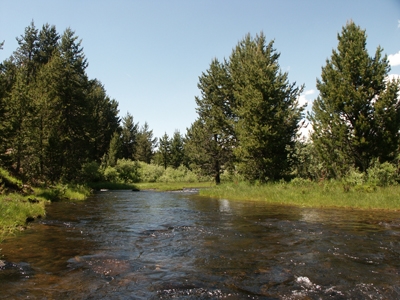
creek.JPG

It is with some hesitation that I review the basics steps for bait fishing. I have been a catch-and-release adherent since the 1970's. But I must remind myself that much of Sierra trout fishing is "put-and-take" harvest fishing. So much pressure is put on the resources that generous weekly stockings in creeks or small streams are frequently harvested in three or four days. Perhaps you have brought your family from southern California on a camping trip to the eastern Sierras. How can I hold judgment on your desire to share a trout dinner with your family, as my generation did back in the 50's and 60's? Please kill only what you will eat fresh, and never take them home in a cooler to reside in a freezer until they get freezer burn or lose their flavor. When you are ready to fish for fun, go to a lake and fish with a fly and bubble. You will have more action, and best of all you can easily release the fish unharmed. Keep in mind that if you catch a trout on bait and they swallow it, there is a high probability that they will not survive. Once they bleed around the gills, they eventually bleed to death. Fishing with lures and flies with pinched barbs allows the lure to be easily removed from their mouth or jaw. Forgive me for this lecture. Old principles die hard after fishing for wild fish for over forty years. If you are new to fishing, just enjoy the sport along with a camp dinner of trout and fried potatoes. However, when you move to a stream with wild trout, plan a camp dinner of hot dogs held over a campfire with a freshly cut willow stick, and don't forget the marshmallows!

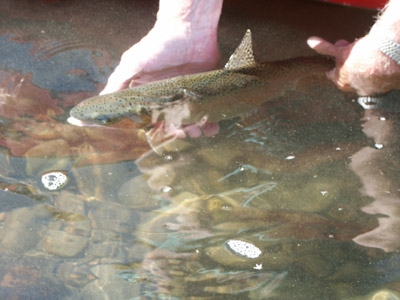
fishrelease.JPG

Stream Strategy and Productive Spots to Fish

I would suggest that you read my article on fly fishing on creeks. I am not trying to convert you to fly fishing so much as to provide a review of the holding water that trout seek out for both feeding and sanctuary. Keep in mind that a fly rod is an excellent rod for bait fishing on creeks and small streams. Unless the creek is a "crick" and so small that you only have to sneak or crawl through the willows and brush to "poke and dab" at a likely spot, get right in the water and walk upstream like fly anglers do. I can not recall seeing a bait angler in the middle of a stream using the same approach as a fly fisher. Why would a bait angler limit his opportunities? Regardless of what bait you are using, get out in the middle of the stream so that you will catch more fish, catch bigger fish, cover more water and make more progress!

CK-Lineoffwatre.jpg

Reasons to Get Your Feet Wet and Fish Upstream

1. Fish face upstream. If you are behind them, you can catch them directly in front of you.
2. If you can see to the bottom of the creek, they can see you! Approaching a creek or stream from the bank often spooks fish.
3. It is much easier to cast to a pocket, pool or small riffle from the center of a stream and maintain a natural drift with your bait. Best of all you are in an ideal position to cast effectively towards either bank.
4. Wade fishing in a stream also allows you to cast directly upstream which creates minimal arm, rod and line movement that might otherwise spook a fish. (Trout have great peripheral vision. Often they lie in broken water out of site, but if they don't see the angler blended into the bank cover, they often see a flash of line or arm or rod movement, which warns them that a predator is near. Even while you are wading in the current, it is paramount to keep your shadow off the water in front of you. I often crouch in the water behind a boulder to make a short cast to a pool above me.)

hide-low.JPG

5. In many instances where there is heavy brush or trees it is difficult to reach choice water from the bank. If you are wading upstream, you have an easier shot at often over-looked water that bank anglers pass up because they can not penetrate the tangled bank barrier.
6. Finally, once you are in the water, keep moving! Bank anglers typically spend too much time sitting on a comfortable rock or log. Fishing is a game of percentages. How many perfect casts to good holding water can you achieve in an outing? If you have made two or three casts to a pool without eliciting a strike, move on to the next spot.
7. I am always amazed at how I can walk up a stream under the cover of moving water without spooking fish, but when I walk along a meadow bank I spook fish way ahead of me just from the vibration of my footsteps, which is another reason to be out in the current.

Productive Spots to Fish

Most fishing books spend chapters discussing and diagramming trout lies and holding water. Let's look at it from a fish's perspective. They want cover to hide from predators. That could mean hiding below broken water, hiding directly below a foam line, holding behind or to the side of a boulder or just lazily resting in shallow water with a canopy of overhanging branches above them. Next, a trout wants to be in a spot where it can find a food source. This could be off to the side of a boulder where the force of water plunging past the boulder funnels insects past the boulder and down a bubbly seam of water. Big Moe will be just behind the boulder waiting just beneath the bubbling foam. But a smaller fish or two might be directly underneath the seam or foam line. A prime lie is a spot which provides both good protection and a steady source of food. The point here is that the trout will be facing upstream waiting for food to come to them. Casting above a trout and allowing your presentation to drift naturally to the waiting trout is the key to success. A final reminder is that if the fish are down on the bottom of the stream bed protected from the fast water, where should your bait be?

The next factor that a trout must consider when picking a home or prime lie is to find a spot that it doesn't have to expend more energy than its calorie intake! I remember diving for abalone along the coast of northern California when I was in my twenties. We would drop an anchor from our inner tube and swim down fifteen to twenty feet through the kelp. The currents and rip tides were so fierce that I could see and feel myself propelled sideways so fast that I wasn't gaining much depth. My partners told me to grab a piece of kelp and pull myself down to the bottom! Meanwhile, over the top of me waves were crashing towards the beach. What a surprise awaited me when I reached the last five or six feet of water. It was relatively slow water compared to just a few feet above, and when I found a ledge or a large rock, it was like being in a swimming pool. Rainbows like fast, shallow riffles. They sink to the bottom and rest in a trough or behind a rock and await their dinner. Brown trout and cutthroats prefer slower water that offers cover and deeper water to escape to in an emergency situation.

Everyone knows to fish a pool, but don't over-look the head of the pool. Often a pool will have a small riffle or ledge that the water plunges down into the pool. Trout will lie in wait for food at the base of the ledge or drop-off. At the tail-out of the pool, water surges upwards from the deeper pool to meet a riffle or run. Trout will often drift back into this shallow water to pick off insects that are pulled down into the pool and then re-emerge in the shallow tail-out where the water is compressed and the food sources likewise. For a couple of years I guided Sam Lawrence, the founder of Budget Rental Cars. We primarily fished the Bitterroot River in Montana. A hatch was on mid-day, and a few simpers could be seen at the tail-out of a pool just below some over-hanging willows. Sam picked off a nice fished as we drifted by the tail-out. We pulled up downstream where Sam landed a nice rainbow, and then we hiked back to the tail-out. Usually, trout will move into the tail-outs under cover of darkness or cloudy weather or a rain storm. Sam walked up behind the tail-out and landed four big trout in less than a half hour. He picked off the first fish closest to the end of the tail-out and worked it downstream in the riffle water. Than he hiked up to the same spot and made a short, deft cast just a little further out towards the pool. He caught the next fish, and then he went on to catch two more really big trout. Sometimes you get lucky, and sometime trout break their own rules for survival!

The greatest reason for fishing a small stream as a beginner is that you gain much knowledge about where the fish are holding. Small streams and many creeks have the same holding water as larger rivers - riffles, pools and runs. My mother taught me the greatest fishing lesson that I have ever learned at age five. We lived in Bishop, California. Near our house was an irrigation ditch that during the summer held many smaller trout. We would see them on our daily walks. They would dart ahead of us in the waving grass and disappear. I begged her to take me fishing until one day she agreed. She cut a willow branch, tied one of my father's fly fishing leaders to the end of the willow branch. Her rigging was simple enough. She tied on a small safety pin to which she molded a piece of Velveeta cheese. She picked a nice shady spot along the ditch, tossed out the offering, and than we sat down for a picnic lunch. Eating my baloney sandwich, I looked down in the water at the Velveeta cheese resting close by. I was five years old, and I knew I was participating in a farce. We had already scared the fish away. I knew they would not come back and bite an offering directly beneath my gaze, and I knew we needed a real hook, and that we would have to be sneaky in our approach. It was a revelation. My mother was not the perfect woman. She was flawed. Worse, I didn't know if she was patronizing me or she was just plain ignorant. I only recently shared this experience with my 90-year old mother. She just laughed and said, "I didn't know anything about fishing, and I probably figured you didn't either."


How Much Gear Should You Take Along?

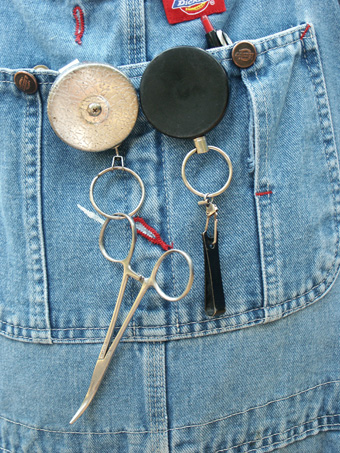
A cheap or expensive fishing vest is essential. Toss in a small, hinged fly box with compartments for split-shot, hooks and swivels. Add a pair of needle-nose pliers and nippers to cut line, as well as a pocket knife. Add a spool of tippet material. Drop in some mosquito repellant into one pocket, along with a mosquito head net. Toss in a bottle of water and an apple into the back pocket. Finally, pick a pocket to store your bait. When I was a youngster, you could buy a curved, tin worm can with air holes in the top. It had rings to thread your belt through. To be on the safe side, I would bring a small box of lures and a few wet flies. A hemostat attached to a retractable pull string is really essential for removing a hook and releasing a fish unharmed. Now, you are ready.

nipper-hemo.jpg

Rigging for Worms and Salmon Eggs on Moving Water (Hook, Line and Sinker!)

The two most popular baits for stream or creek fishing are red worms and salmon eggs. It doesn't get any easier than this. Use a short-shank number 8 or 10 hook. Embed the hook completely inside the worm. If you are fishing a slow stretch of water, you may not need a split-shot for the worm to drift naturally on the bottom. If need be, attach a small split-shot about 10 to 12-inches above the hook. If your weight is impeding a natural drift along the bottom, change out the split-shot with a smaller one. Cast upstream and allow the bait to drift through a prime lie. Keep a taunt line, as any slack in the line and you will not be able to detect subtle bites. Your bait is drifting back to you as you slowly lift the rod tip and reel in excess line. Suddenly your bait stops tumbling along the bottom, but you did not detect a tick at the end of your line nor a sharp pull on your rod tip. Maybe you are stuck. After all you have already replaced your hook and sinker when it became lodged in a crevice. Your instinct is to quickly snatch the bait off the bottom. But just as likely a trout has gingerly sucked in your bait in the corner of its mouth and it has moved back to its former position or lie. Lift the rod slowly upwards to determine if there is resistance and a fish on the line. Otherwise, if you react too quickly thinking that you have got stuck on the bottom, you might just rip the bait out of the fish's mouth without embedding the hook. If it is not a fish and your bait breaks free, you may simply lower the rod and allow the bait to continue drifting. Learn to be patient when fishing fast, tumbling water, as snagging the bottom is quite common.
A cricket rigging begins with 1 or 2 BB weights followed by a #14 Snap Swivel. Attached to the Snap Swivel is a two-pound test, 18-22-inch leader terminating with a #10 worm hook.

Rigging a Wet Fly on a Spinning Outfit for Larger Streams

You don't have to be a fly fisher to use a wet fly or streamer pattern on a river. Simply add a medium size casting bubble to your line and fill it full with water. (They have a retractable stop plug.) After the bubble add a #14 Snap Swivel. (Now the bubble can not slide forward.) Add 5 to 6-feet of two to three pound test leader. At the terminal end add a streamer. Cast downstream in a quartering angle. In other words, stand facing the opposite bank. Draw an imaginary line from your feet to the opposing bank. You now have half the stream above you and half the stream below you. As you face the bank the stream flow is coming from your left down stream on your right side. Now, divide the stream below you in half. This quarter demarcation is your target angle for the opposing bank. Cast as close to the bank as possible. If a trout is on the far bank, he will see the streamer coming at him broadside and "swimming" out and away from the bank, as the current sweeps the fly and bubble out towards the faster water. Sometimes if you plant it right in front of the trout your cast will trigger a reaction take. Often times they will follow the streamer downstream and hit the fly just as it swings out from the bank and slows down.

Rigging for Worms, Salmon Eggs and Power Baits in Still Water--Unlike a stream where you want your bait drifting on or near the bottom, in a lake you will need to keep your bait visible above the weeds or mossy bottom. You need to float or suspend your bait one to two feet above the bottom with a marshmallow, or if you are fishing with a nightcrawler, you may want to inflate the nightcrawler with air from a device that most tackle shops carry.

Rigging a Worm: Add a ¼ oz. Egg Sinker to your line. Directly in front of the Egg Sinker add a #14 Snap Swivel with an improved clinch knot. Attach a two-pound test, 18-22-inch leader . At the end of the leader add a #10-14 worm hook. Just add worm! If the lake is weedy, use an inflated nightcrawler to float your bait above the weeds.

Rigging Salmon Eggs: Add a ¼ oz. Egg Sinker to your line with an improved clinch knot. Directly in front of the Egg Sinker add a #14 Snap Swivel. Attach a two-pound test, 18-22-inch leader. At the end of the leader add a #10-14 worm hook or a treble hook. Before you attach the egg(s) run a miniature marshmallow through the hook up to the eye of the hook. The marshmallow will float the egg up off the bottom. If you use PowerBait dough or trout bait, it floats. Be sure to test the amount that you apply to the hook to be sure that it floats and negates the weight of the hook and the line.

Rigging a PowerBait Creature: Add a ¼ oz. Egg Sinker to your line. Directly in front of the Egg Sinker add a #14 Snap Swivel. Attach a two-pound, 18-22-inch leader. At the end of the leader add a #14 dry fly hook and attach a scented PowerBait creature, such as a minnow, grub or lizard.

Note: I would like to thank Carolyn Webb of Virginia Lakes Resort for the above formulas. It has been too many years since I last used bait. Carolyn teaches children the merits of catch-and-release using the fly-and-bubble technique.


Fishing with Live, Natural Bait
After almost thirty years, I met up with my favorite childhood cousin, Steve Odell. Steve grew up in Lee Vining where his father was a deputy sheriff. He took to fishing Lee Vining Creek at a very early age. He is a bait fisherman from the old school, which is to simply gather up natural fish food such as crickets, grasshoppers and ----ant eggs! I had taken a different path in my angling life preferring to fly fish. When Steve told me about an Old Indian woman named Nellie who was the best angler in town, I was ready to listen. Nellie had the reputation for knowing how to catch fish even when they weren't on the bite. Nellie gathered up her fishing gear and with Steve in tow went hunting up ant hills to raid the ant eggs. After she taught him to ignore the ant bites and stop crying, off they went to one of the Virginia Lakes. Steve said that the fishing was fantastic and that lesson changed his perspective on how to fish. He said some tourists gathered around when they began catching some big fish. When they asked what Nellie and Steve were using, Steve said they were using ant eggs. Some of the tourists just shook their head in disbelief thinking they were having their leg pulled. Recently I was reminded of Steve's lesson from Nellie when I read an article on bait fishing in the free 2007 Eastern Sierra Fishing Guide. If you pass through Bishop country, be sure to pick one up as it is an excellent fishing resource.
The author of the article, "Getting Back to Nature", suggests gathering up the ant eggs early in the morning when the ants are cold and lethargic. He recommends threading three or four ant eggs on a fine wire #14 hook. He also suggests adding a bit of Styrofoam first to keep the eggs off the bottom as they are easily damaged. If you are fishing with children, make an adventure out of gathering up crickets, grubs, beetles and ant eggs, and fish with the real thing! It will probably be a lesson that both you and your children will never forget.

Fishing with Grasshoppers the HemingWAY
(I'll post this information next September when I can get some good photographs.)

For more tips and techniques on fishing, visit Dave's companion site fishingtips101.com.

BLM Campgrounds / Eagle Lake

| | Comments (0) | TrackBacks (0)

(BLM) www.blm.gov/ca/st/en/fo.eaglelakecamping.html

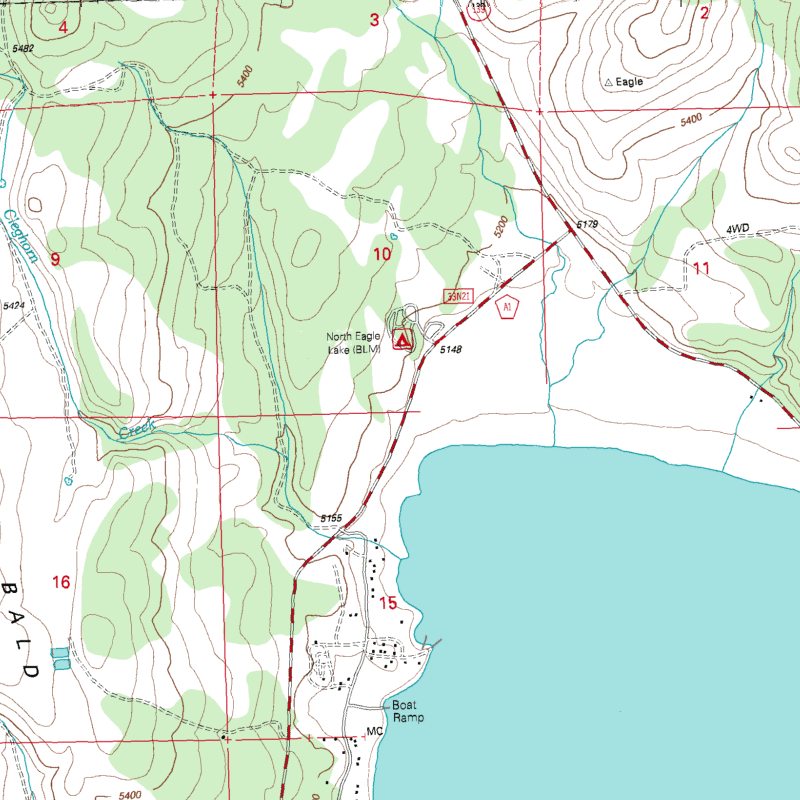
North Eagle Lake Campground

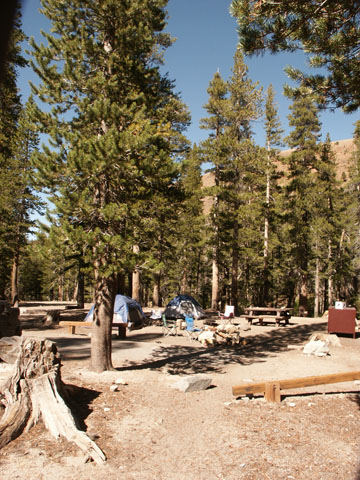
Area: Located at the north end of the lake, away from the lake on a wooded slope

N-Eagle-BLMcamp.jpg


Administered by: Bureau of Land Management – Eagle Lake Field Office, 2950 Riverside Drive, Susanville, CA 96130.  Phone: (530) 257-0456

Setting: The campground is exposed to harsh sun and high winds, but it is a favorite area for anglers during the fall.

Elevation: 5,100

Season Length: Subject to weather conditions, mid May to early November

Number of sites: 20

Fee: $8 per night for single occupancy or $11 for multiple occupancy

RV sites:  Yes   RV’s up to: 35-feet    No Hook-ups:   Garbage: containers

Toilets: Vault    Water: Yes      Picnic tables and fire grills                     

Nearest town: Spaulding (west side of lake)

Nearby facilities:

Nearby boat launch: A private boat launch is located on Stone Road about 1.5 miles away.

Reservations:  No

Additional information:  Pets must be kept on a leash.  Please note that the dates and prices below are subject to change and reflect 2007 data.  If listed, the campground opening dates are approximate due to weather conditions. 

Directions: From Highway 395 continue on Highway 36 to Susanville.  Turn north  on Highway 139 for 30 miles.  Turn west (left) on County Road A-1 and travel one-half mile and turn right at the campground entrance.

_________________

Rocky Point East Campground / Eagle Lake

Area: The east shore of Rocky Point on the west side of the lake

Administered by: Bureau of Land Management – Eagle Lake Field Office, 2950 Riverside Drive, Susanville, CA 96130.  Phone: (530) 257-0456

Setting: This is an undeveloped campground, and it is best suited for self-contained camping.

Elevation: 5,100

Season Length: Subject to weather conditions.  Generally from Memorial Day to November.

Number of sites: NA

Fee: None

RV sites:  Yes   RV’s up to:     No Hook-ups:   Garbage: containers 

Toilets: Vault    Water: No     No Picnic tables or fire grills                   

Nearest town: Spaulding (west side of lake)

Nearby facilities:

Nearby boat launch:  The area is packed earth, gravel or sand.  It is possible to launch small boats along the shoreline in the campground area.

Reservations:  No

Additional information:  Pets must be kept on a leash.  Please note that the dates and prices below are subject to change and reflect 2007 data.  If listed, the campground opening dates are approximate due to weather conditions. 

Directions: From Highway 395 continue on Highway 36 to Susanville.  Turn north on Highway 139 for 30 miles.  Turn west (left) on County Road A-1 and travel approximately 5 miles.  Turn left (south) on Lakeside Drive in the Bucks Bay subdivision.  Continue south to the Rocky Point access road and watch for signs to Rocky Point.  Follow the dirt road south along the shoreline until you reach the campground area.

_________________

Rocky Point West Campground / Eagle Lake

Area: Rocky Point West Campground is on the west shore of Rocky Point, which is on the west side of the lake near Spaulding.

Administered by: Bureau of Land Management – Eagle Lake Field Office, 2950 Riverside Drive, Susanville, CA 96130.  Phone: (530) 257-0456

Setting: Another small undeveloped campground

Elevation: 5,100

Season Length: Subject to weather conditions, generally from Memorial Day to November. 

Number of sites:

Fee: Nonw

RV sites:  Yes   RV’s up to:     Hook-ups:   Garbage: containers  Pack-it-out!

Toilets: Vault    Water: Yes      Picnic tables and fire grills / pits            

Nearest town: Spaulding (west side of lake)

Nearby facilities:

Nearby fishing:

Reservations:  No

Additional information:  Pets must be kept on a leash.  Please note that the dates and prices below are subject to change and reflect 2007 data.  If listed, the campground opening dates are approximate due to weather conditions.  For reservable campsites, go on line at  www.recreation.gov or phone toll free at 877-444-6777.

Directions: From Highway 395 continue on Highway 36 to Susanville.  Turn north on Highway 139 for 30 miles.  Turn west (left) on County Road A-1 and drive six miles.  Turn south (left) at the bottom of a mile long grade.  The town of Spaulding should be visible across the bay as you come down the grade.

 _____________

Dispersed BLM camping around Eagle Lake:  “Although dispersed camping is allowed on all land administered by the Bureau of Land Management…I around the lake, the stretch of shoreline between Hwy. 139 and the lake a couple of miles south of the County Road A-1 and Highway 139 intersection is the most popular.  Although during the high use seasons portable toilets are provided in this area, self-contained camping is required to avoid the disposal of gray water within the closed basin of Eagle Lake.  With the exception of portable toilets, no services are provided in this dispersed camping area….When camping, ‘Leave No Trace’ so the area is as clean or cleaner than when you found it….”  BLM – Eagle Lake web site


Bureau of Land Management – Eagle Lake Field Office, 2950 Riverside Drive, Susanville, CA 96130.  Phone: (530) 257-0456


Merrill Campground / Eagle Lake

| | Comments (0) | TrackBacks (0)

Merrill Campground / Eagle Lake

Area: Located at the south end of Eagle Lake

Eagle-southwest.jpg


Lassen National Forest, 2550 Riverside Drive, Susanville, CA 96130, (530) 257-2151

Administered by: Eagle Lake Ranger District, (530) 258-4188

Setting:

Elevation: 5,100

Season Length: Subject to weather conditions, May-October

Number of sites: 173 individual sites and two small-group sites (waterfront sites for tent camping)

Fee: $18-$56  $19 for water front sites 57-73 with no hook-ups; $29 for sites 27-56 and 123-156 with partial hook-ups; $33 for sites 1-26 and 91-122 with full hook-ups; $56 for small groups at site 17 and 118 with full hook-ups.

RV sites:  Yes   RV’s up to: 50-feet    Full and Partial Hook-ups:   Garbage: containers 

Toilets: Vault    Water: Yes      Picnic tables and fire grills                     

Nearest town: Spaulding (west side of lake)

Nearby boat launch: Eagle Lake Marina, resort and campground

Reservations:  Yes (fee)

Additional information:  A dump station is nearby.  Pets must be kept on a leash.  Please note that the dates and prices below are subject to change and reflect 2007 data.  If listed, the campground opening dates are approximate due to weather conditions.  For reservable campsites, go on line at  www.recreation.gov or phone toll free at 877-444-6777.

Directions: From Highway 395 continue on Highway 36 to Susanville.  Continue on Highway 36 west to A1/Eagle Lake Road.  Turn north on Eagle Lake Road and drive 17.5 miles to the campground.


Eagle Campground / Eagle Lake

| | Comments (0) | TrackBacks (0)

Eagle Campground / Eagle Lake

Area: Located at the south end of Eagle Lake above Aspen Grove Walk-in Campground.

Eagle-southwest.jpg


Lassen National Forest, 2550 Riverside Drive, Susanville, CA 96130, (530) 257-2151

Administered by: Eagle Lake Ranger District, (530) 258-4188

Setting:

Elevation: 5,100

Season Length: Subject to weather conditions, May-September

Number of sites: 50 individual sites and two sites for small groups.

Fee: $18; $30 for small group

RV sites:  Yes   RV’s up to: 25-feet    Hook-ups:   Garbage: containers

Toilets: Flush    Water: Yes      Picnic tables and fire grills                     

Nearest town: Spaulding (west side of lake)

Nearby facilities: A dump station is 1.5 miles away.

Nearby boat launch: Eagle Lake Marina

Reservations: Yes (fee)

Additional information:  Some of the facilities are wheel-chair accessible.  Pets must be kept on a leash.  Please note that the dates and prices below are subject to change and reflect 2007 data.  If listed, the campground opening dates are approximate due to weather conditions.  For reservable campsites, go on line at  www.recreation.gov or phone toll free at 877-444-6777.

Directions: From Highway 395 continue on Highway 36 to Susanville.  Continue on Highway 36 west to A1/Eagle Lake Road.  Turn north on Eagle Lake Road and drive 15.5 miles to the junction with County Road 231.  Drive on 231 a half-mile to the campground on the left.


Christie Campground / Eagle Lake

| | Comments (0) | TrackBacks (0)

Christie Campground / Eagle Lake

Area: Located at the south end of Eagle Lake

Eagle-south.jpg


Lassen National Forest, 2550 Riverside Drive, Susanville, CA 96130, (530) 257-2151

Administered by: Eagle Lake Ranger District, (530) 258-4188

Setting:

Elevation: 5,100

Season Length: Subject to weather conditions, May-September

Number of sites: 69; some pull-through sites for larger rigs

Fee: $18 single; $30 small group; $5 for additional vehicle

RV sites:  Yes   RV’s up to: 50-feet    No Hook-ups:   Garbage: containers

Toilets: Flush    Water: Yes      Picnic tables and fire grills                     

Nearest town: Spaulding (west side of lake)

Nearby facilities: A dump station is 2.5 miles away at Merrill Campground.  A store is nearby.

Nearby boat launch: Eagle Lake Marina has a boat launch, as well as boat rentals, boat slips, a full-service marina and five campgrounds.

Reservations:  Yes (fee)

Additional information:  Some handicapped facilities are provided.  A five-mile paved wheel-chair trail leads to Aspen Grove Walk-in Campground.  Pets must be kept on a leash.  Please note that the dates and prices below are subject to change and reflect 2008 data.  If listed, the campground opening dates are approximate due to weather conditions.  For reservable campsites, go on line at  www.recreation.gov or phone toll free at 877-444-6777.

Directions: From Highway 395 continue on Highway 36 to Susanville.  Continue on Highway 36 west to A1/Eagle Lake Road.  Turn north on Eagle Lake Road and drive 17.5 miles to the campground entrance on the right.


Aspen Grove Walk-In Campground / Eagle Lake

| | Comments (0) | TrackBacks (0)

Aspen Grove Walk-in Campground / Eagle Lake

Area: South end of Eagle Lake

Eagle-south.jpg


Lassen National Forest, 2550 Riverside Drive, Susanville, CA 96130, (530) 257-2151

Administered by: Eagle Lake Ranger District, (530) 258-4188

Setting:

Elevation: 5100

Season Length: Subject to weather conditions, May-September

Number of sites: 26

Fee: $18

RV sites:  No.   Tents Only     Garbage: containers

Toilets: Flush    Water: Yes      Picnic tables and fire grills                     

Nearest town: Spaulding (west side of lake)

Nearby facilities: A dump station is 3.5 miles away.

Nearby boat launch: The campground is close to a boat launch.

Reservations: No

Additional information:  No wheel-chair facilities are available.  However, a five-mile paved wheel-chair trail leads to Christie Campground.  Pets must be kept on a leash.  Please note that the dates and prices below are subject to change and reflect 2008 data.  If listed, the campground opening dates are approximate due to weather conditions

Directions: From Highway 395 continue on Highway 36 to Susanville.  Continue on Highway 36 west to A1/Eagle Lake Road.  Turn north on Eagle Lake Road and drive 15.5 miles to the junction with County Road 231.  Drive on 231 two miles to the campground parking area.


Eagle Lake / Susanville

| | Comments (0) | TrackBacks (0)

Side Trip: A1 or Highway 139 to Eagle Lake

 
Eagle Lake

Eagle-StonesLanding.jpg


Elevation: 5,100

Road condition:   Paved   

Day hikes to fishing:


Eagle-Osprey-Mid.jpg


Region:           Area/description: Located in a semi-arid basin surrounded by volcanic mountains on the eastern flank of the Cascade Range

Eagle-SpauldingTract.jpg

Lake size: As the second largest natural lake in California, Eagle Lake is almost 13-miles long and exceeds 27,000 acres at full pool.  Boaters have about 100 miles of shoreline to explore and fish for those famous Eagle Lake lunkers that can reach upwards of eight pounds and average 2 to 3 pounds.   Depth: Maximum 92-feet.  The BLM web site describes the lake as irregular in shape, divided into three sections and connected by channels.  “The northern section averages six feet in depth; the middle section has an average of ten feet; and the southern section reaches a maximum of 92 feet.”      Species: Eagle Lake Trout are the only strain of trout adaptable to the high alkalinity in the lake.  The only other fish inhabitants in the lake are tui chub and minnows.  With high concentrations of aquatic insect life, especially leeches and freshwater shrimp (scuds), trout experience phenomenal growth.  Planted trout can exceed two pounds by the end of their second year.

Eagle-southwest.jpg

Tips: As noted above, the shallow waters in the northern section of the lake becomes heated by June and the trout migrate to the deeper and cooler waters in the southern part of the lake, especially around underwater springs.  Eagle Lake is huge and challenging for first time visitors, especially during the early part of summer.  It can also become quite crowded.  If you want to locate traditional popular spots, just look for the flotilla over the springs over by Eagle’s Nest and Wildcat.  When fall arrives, the trout begin to migrate back to the shallow waters of the north end of the lake to bulk up for the winter.

            Bait fishing: Bait fishing from a boat or from the shore typically utilizes a nightcrawler under a slip bobber or an inflated nightcrawler with a sliding sinker.  Popular shore spots are the rock jetty at the Eagle Lake Marina and the shoreline along Highway 139 at the northern end of the lake.

Eagle-south.jpg

            Fly fishing: Work in and around the tulles with stillwater imitations for leeches and freshwater shrimp in the northern sections as well as the west shoreline south of Spaulding.  Popular patterns include Woolly Buggers and Denny Rickards’ Stillwater Nymph.

            Trolling: During the spring troll slowly with a nightcrawler along the shoreline.  Small lures behind flashers are popular.  Favorite lures include Needlefish, Triple Teasers, and a variety of Rapalas. As the water becomes heated by the summer sun, trollers work their lures down in deeper zones using lead core lines with long leaders or downriggers.         

Closest town or supplies: Spaulding

Contacts: Lassen National Forest (530) 257-2151; BLM (530) 257-0456; Eagle Lake Marina (530) 825-3454; Spaulding Marina and Resort (530) 825-2118; Eagle Lake RV Park (530) 825-3133; Eagle Lake General Store in Spaulding (530) 825-2191

Facilities: Lodge, marina, grocery store, bait and tackle, RV campground

Nearest campgrounds: National Forest Campgrounds: North Eagle Lake, Christie, Merrill, Aspen Grove Walk-In, Eagle.  BLM Campgrounds: Rocky Point-East, Rocky Point-West and primitive, dispersed camping sites.

Boat launches: Eagle Lake Marina (full service) on the southern end of the lake (530) 825-454; Spaulding Track mid-way up the lake on the west shore and Stones Landing at the northern end of the lake.

Mariner’s Resort (public launch facility) (530) 825-3333

Fishing season: Opens on the Saturday of Memorial Day weekend and closes December 31.      

Favorite lures or bait:

Favorite fly patterns: Denny Rickards, in his book Fly Fishing the West’s Best Trophy Lakes, recommends targeting the shoreline in late fall fishing with his Stillwater Nymph in size 10 when the scuds migrate to the shallows.

Stocking information:

Additional information:

Directions: From Highway 395 continue on Highway 36 to Susanville.  Continue on Highway 36 west to A1/Eagle Lake Road.  Turn north on Eagle Lake Road and drive 18 miles to the lake.